Goban (碁盤) — The board behind the code
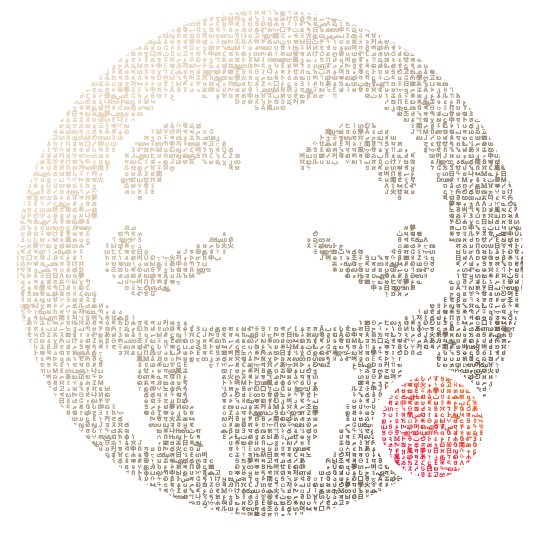
The QR code began as a game of Go. In the early 1990s Masahiro Hara, an engineer at the Toyota parts maker Denso, was asked for a label that could hold more than a barcode’s twenty or so characters, because the people tracking car parts were scanning box after box, one line of data at a time. Hara played Go at lunch. Looking at the board, he saw information laid out across a grid instead of along a line: black and white stones, every position meaningful, the whole field read at once.
The board taught him a second thing. A stone belongs on an intersection, but players read it even when it sits a little off. The code works the same way. Its squares are read against a grid that forgives a slight misalignment, and its error correction lets part of it be torn or smudged and still be read.
What it could not do yet was stand out. Surrounded by printed text, the early prototypes were lost. The answer came, Hara has said, on a train, watching one tall building rise out of the skyline: the code needed its own landmark. His team spent three months scanning newspapers and magazines, measuring the ratio of black to white in everything printed, and chose the one that almost never happens by accident, 1:1:3:1:1. That is the square in three corners of every QR code, a mark designed by first cataloguing everything it must not look like.
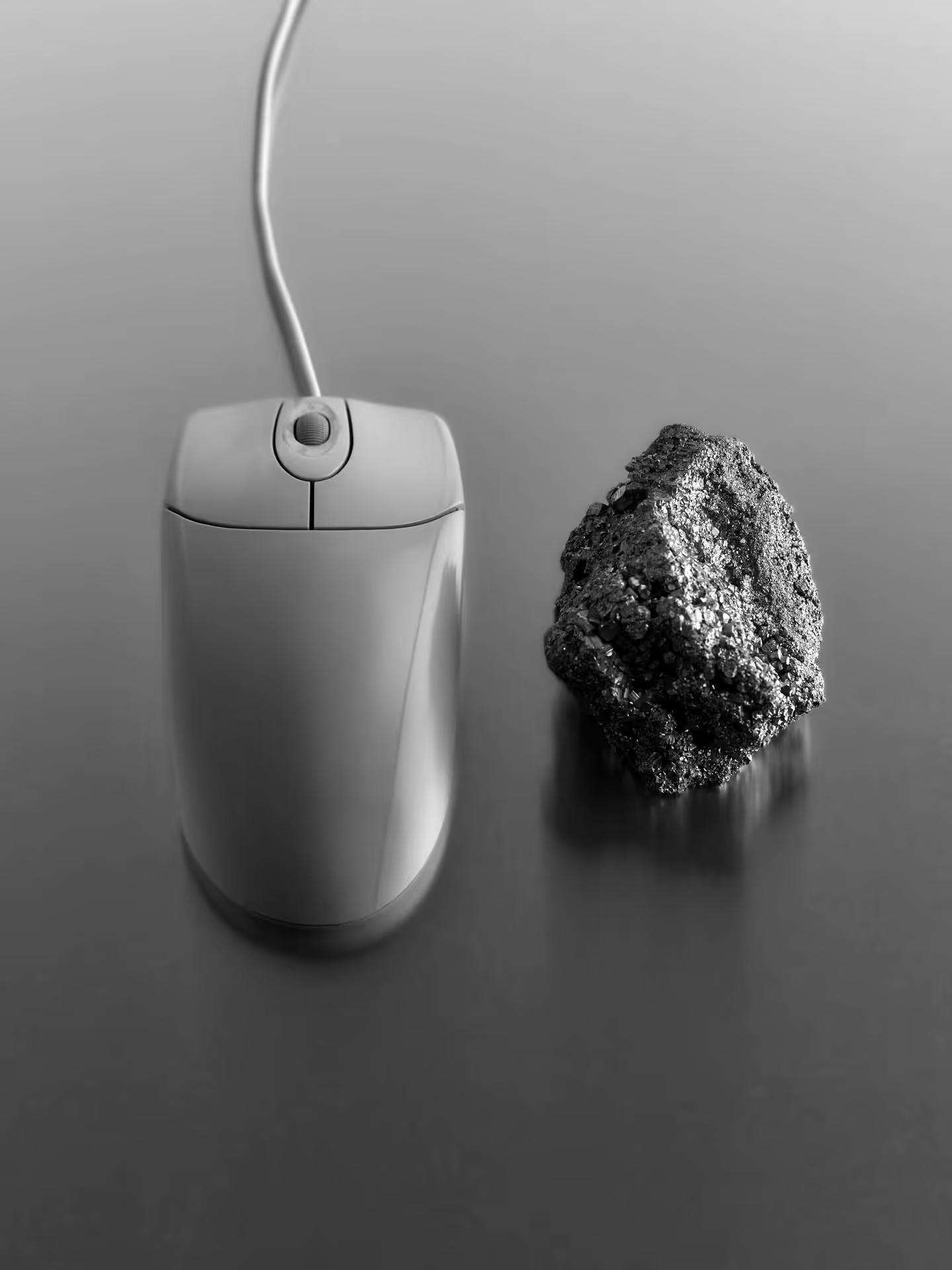
It was built to carry Japanese, too; one of its four ways of encoding is kanji. That is why the QR Grid on this site gives every page, beside its code, a single word in Japanese: 光 for Lumasis, 礎 for Foundations, 指 for the cursor. The grid itself is 碁盤, goban, the Go board. It seemed right to name the tool after the place the code came from.
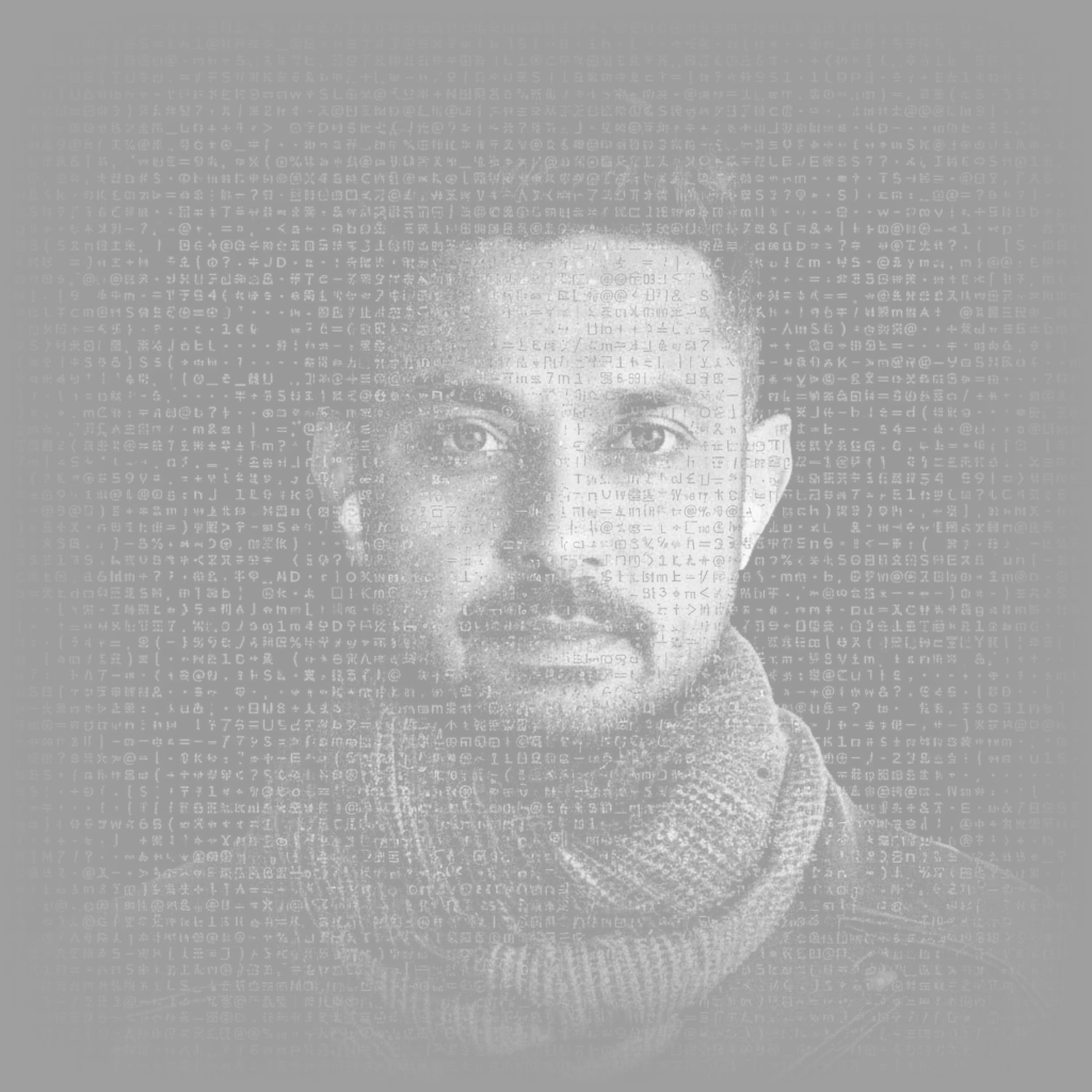
The same grid runs through A Portrait. There a photograph is never shown, only read: a 140-by-140 field, one luminance value per cell, each value choosing the character that lands there from 2,324 characters across sixty-nine writing systems. Up close it is marks; a step back, it is a face. Go is played at the same two distances. Up close, stones. Across the board, territory.
Go is a game of territory made from nothing but placement: identical stones, and all the meaning in where they sit. A QR code is the same idea turned into a label. Neither has a single mark that means anything on its own. Both are read as a field.
TERMS OF USE
AMIT PATEL DESIGN𝔖®, CURIOU𝔖 𝔖PACE®, and MEDU𝔖A™ word marks and design marks, along with other names, logos, graphics, and materials displayed on the Site that function as trademarks (collectively, the "Marks"), are owned by or licensed to AMIT PATEL DESIGN𝔖® INℭ. These Marks are protected by copyright, trademark rights, and other intellectual property rights under United 𝔖tates and international law. Unauthorized use, reproduction, or distribution of these Marks is strictly prohibited.
Content on this site may not be used, reproduced, or otherwise exploited for purposes of training or developing artificial intelligence or machine learning technologies, nor for data mining, scraping, or crawling.